Space № 01
Could a Mars Dust Storm Knock Over a Rocket? The Physics
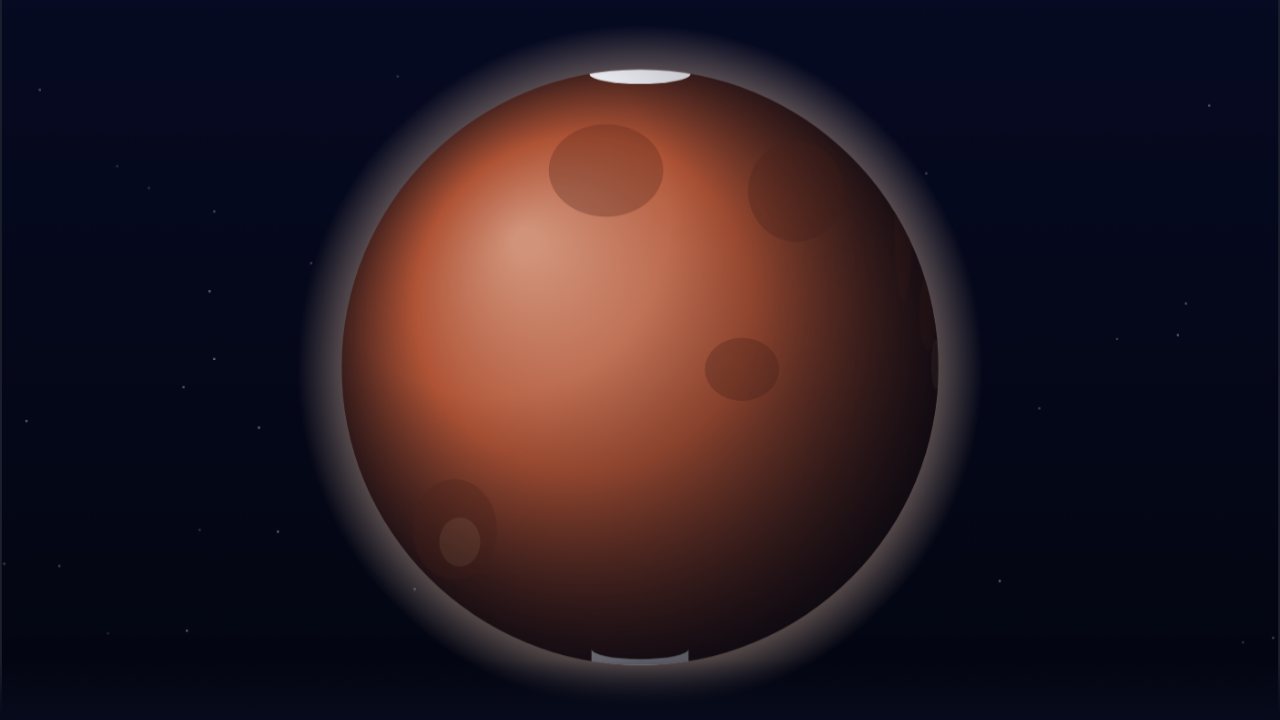
A 100 km/h Martian storm pushes like a 12 km/h breeze on Earth. We run the tipping math for a 50 m rocket and find what Mars dust really threatens.
 Space Interactive
 Space Interactive
 Space Interactive
 Physics Interactive
 Space Interactive
 Physics Interactive
 Space Interactive
 Planets Interactive
 Planets Interactive
 Space Interactive
 Space Interactive
 Space Interactive
 Earth Interactive
 Space Interactive
 Space Interactive
 Physics Interactive
 Physics Interactive
 Physics Interactive
 Quantum Interactive
 Relativity Interactive
 Light Interactive
 Space Interactive
 Space Interactive
 Space Interactive
 Space Interactive
 Space Interactive
 Relativity Interactive
 Space Interactive
 Space Interactive
 Space Interactive
 Space Interactive
A 100 km/h Martian storm pushes like a 12 km/h breeze on Earth. We run the tipping math for a 50 m rocket and find what Mars dust really threatens.
We run the numbers on Astrophage: E=mc² energy, the 1.5 g trip to Tau Ceti, the 25.984 µm Petrova line, and why the Hail Mary's fuel load falls short.
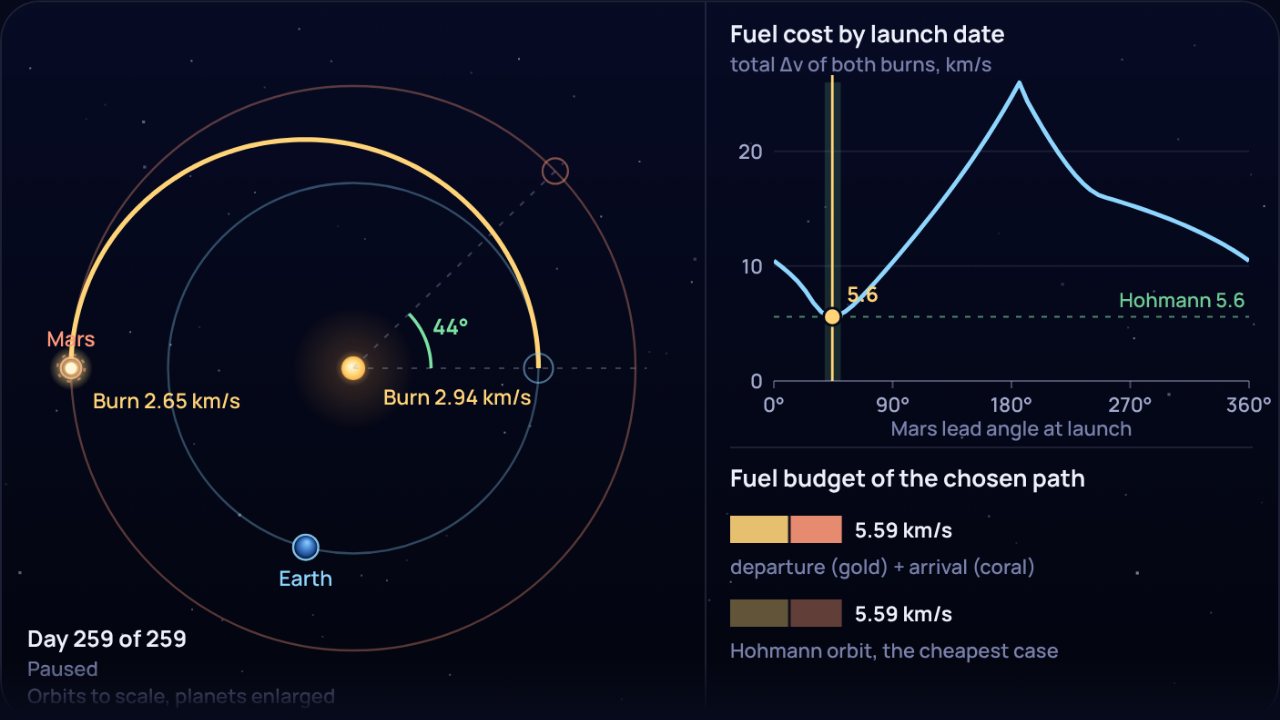
About 7 months, but why? We derive the 259-day Hohmann transfer, the 26-month launch window and why most real probes arrive in 200 to 230 days.
At a stellar black hole's horizon the stretch is 21 million g. At Sgr A* it is 0.0001 g. Tidal math, your clock and what outsiders see, worked out.
Betelgeuse's supernova should peak near magnitude -10 to -11: about 250 times Venus and a seventh of the full Moon. The magnitude math, step by step.
Blowing Earth apart takes 2.49×10³² J, 11% more than the textbook figure, or 7.5 days of the Sun's whole output. The Death Star math, layer by layer.
Lightning peaks at tens of gigawatts to terawatts but lasts microseconds, so a flash holds about 1 GJ. Doc Brown's 1.21 GW, checked.