Space 01
Is Kessler Syndrome Real? Gravity's Debris vs Reality
Is Kessler syndrome real? Yes, but it unfolds over decades, not Gravity's 90 minutes. Real debris counts, collision speeds and impact energies, computed.
Is Kessler syndrome real? Yes, but it unfolds over decades, not Gravity's 90 minutes. Real debris counts, collision speeds and impact energies, computed.
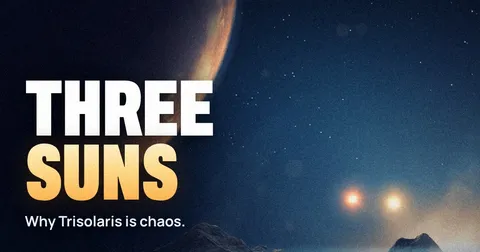
We simulate a real three-body system in Python, show how chaos ends Trisolaris's stable eras, and explain why the real Alpha Centauri is calm.
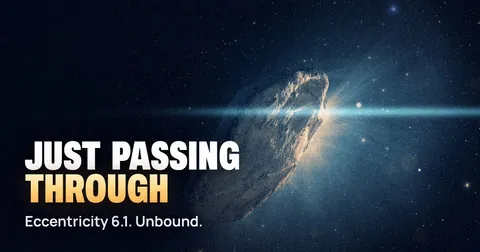
3I/ATLAS has eccentricity 6.1 and leaves at 58 km/s. We compute its orbital energy, compare 'Oumuamua and Borisov, and show why no planet could fling it.
Webb orbits L2, 1.5 million km out, so Sun, Earth and Moon stay on one side. L2 isn't where gravity cancels, and sitting at it means an endless eclipse.
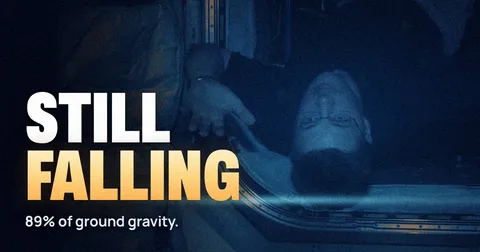
Gravity at the ISS is 89% of Earth's surface value. Astronauts float because they fall 4.35 m every second and keep missing. Here are the numbers.
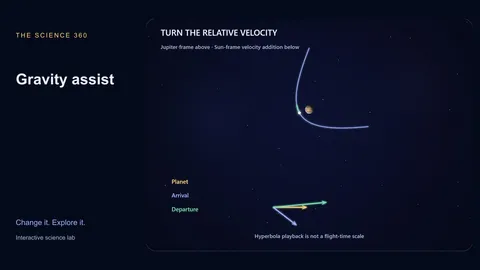
Resolve the gravity-assist puzzle by comparing planet-relative and Sun-relative velocities during a simplified Jupiter flyby.
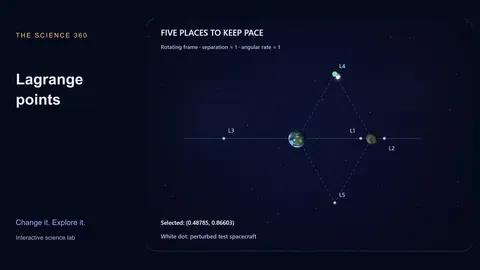
Understand the five rotating-frame equilibrium points, why L1 and L2 need station keeping, and what makes L4 and L5 different.
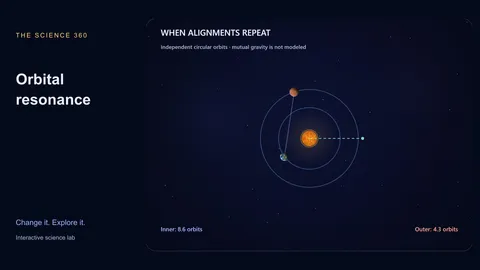
Explore 2:1 and 3:2 orbital rhythms, calculate radius ratios with Kepler’s law, and learn why a simple period match does not prove dynamical resonance.
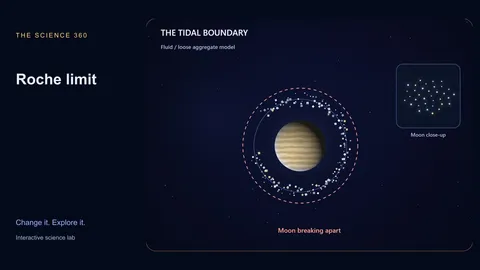
Follow a density-based worked example of the Roche limit, then test when an icy or rocky moon crosses a tidal-disruption boundary.
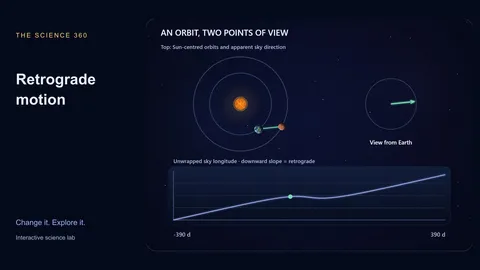
Use Earth’s moving viewpoint to explain Mars, Mercury and Venus retrograde motion, with a worked synodic-period example.