How far have you travelled through space since you were born?
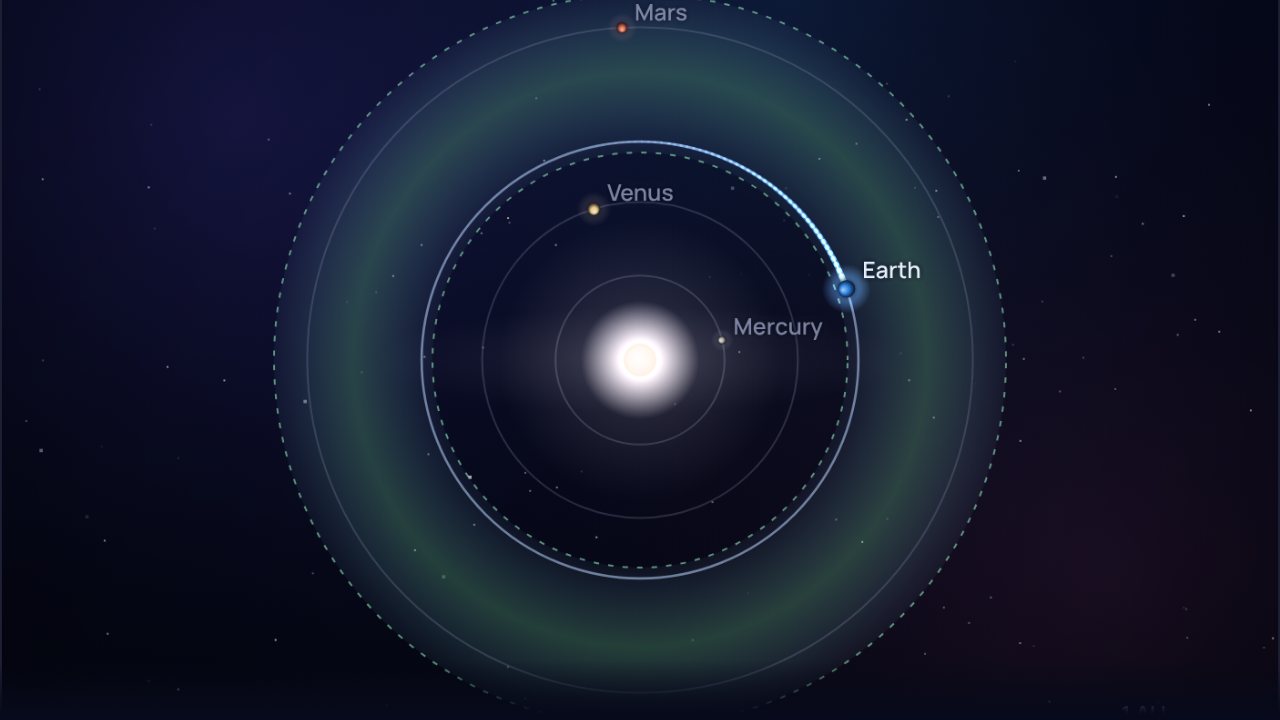
Earth carries you round the Sun at 29.78 km/s, so every year you travel about 939.8 million km (584.0 million miles) round the Sun, and a 30-year-old has gone about 28.19 billion km. Over the same 30 years the Sun has carried you about 226 billion km round the Milky Way, and the galaxy has moved about 535 billion km relative to the cosmic microwave background. Each figure is a speed multiplied by your age in seconds.
Those numbers cannot be added up. The motions point in different directions, and the Sun's trip round the galaxy runs nearly opposite to the galaxy's own motion through space. The distance that is actually measured, relative to the microwave background, is 350 billion km for those 30 years, not the 790 billion km you would get by adding. For the speeds themselves and how each one is measured, see How fast is Earth moving?.
Key results
- Round the Sun: 29.78 km/s, which is 107,208 km/h (66,616 mph) and 939.8 million km per year. That is 6.28 times the Earth to Sun distance each year.
- Round the Milky Way: the Sun's neighbourhood circles the galactic centre at 239 ± 5 km/s, about 7.54 billion km a year or 50.4 AU.
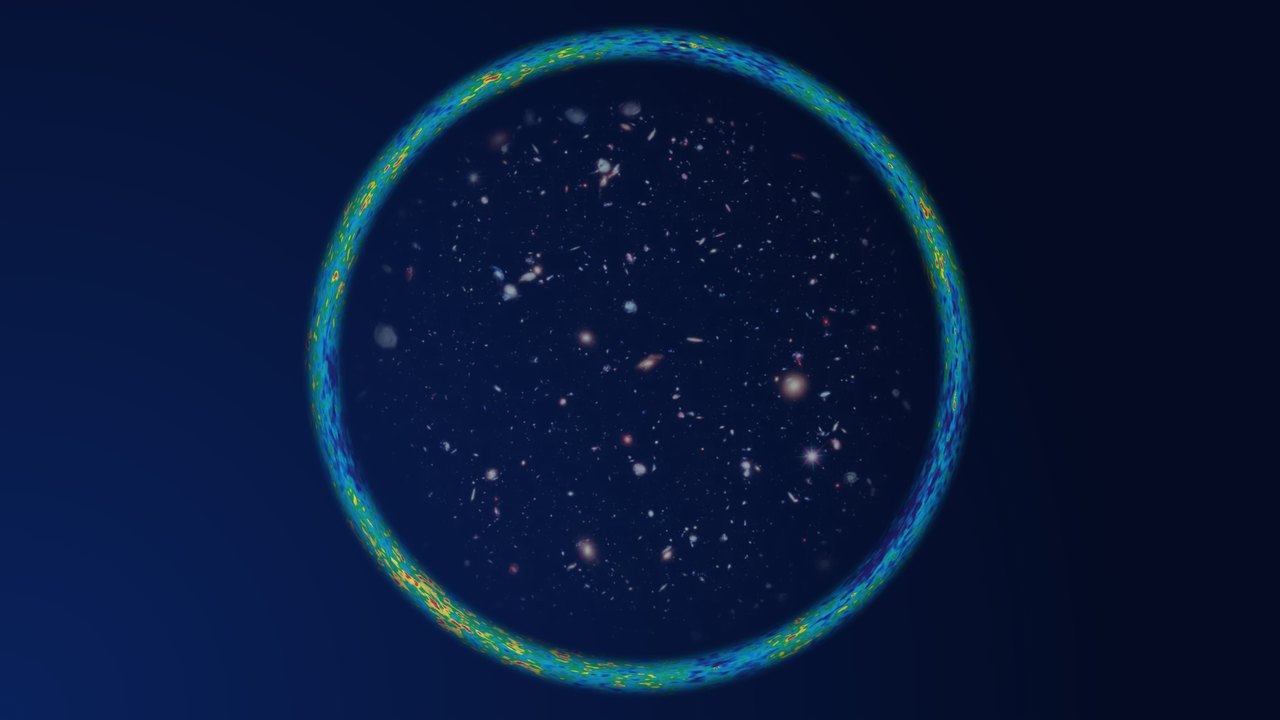
- Through the cosmos: the Milky Way's centre moves at 565 ± 5 km/s relative to the cosmic microwave background, 17.8 billion km a year.
- The honest total: the Sun moves at 369.82 km/s relative to the microwave background, because the galactic orbit and the galaxy's motion point about 150 degrees apart and partly cancel. That is 11.7 billion km a year, about 0.0012 light years.
Six lifetimes on the odometer
Each example counts exact years of 365.25 days. The button loads it in the calculator, where the counters run live from the visitor’s own birth date.
Your first year: one lap of the Sun
939.8 million kmIn one year Earth goes once round the Sun and carries you 939.8 million km, or 584.0 million miles. That is the circumference of an orbit with a radius of one astronomical unit, 149.6 million km, which is why the number comes out so close to 2π × 149.6 million km.
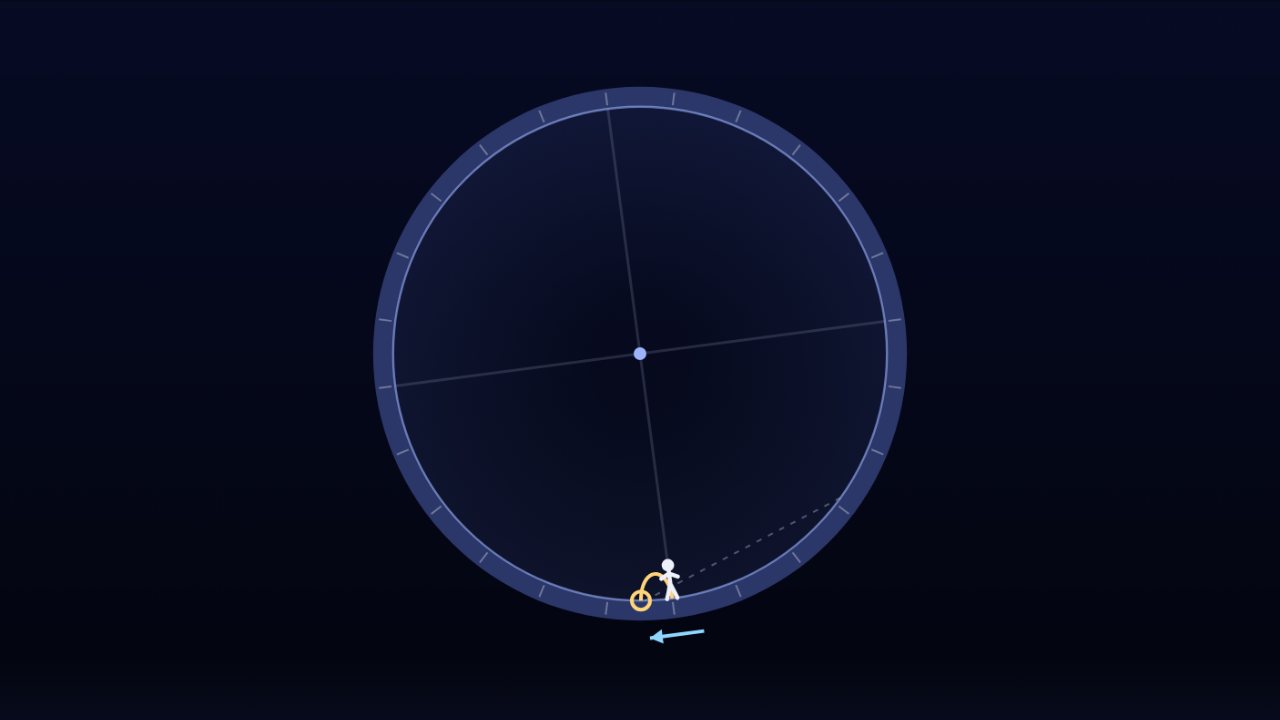
In the same year the Sun moves 7.54 billion km round the galaxy, 8 times further. That is why the coil on the stage is stretched along the Sun's path: Earth never returns to the same point in space.
A 10-year-old in Mumbai
10 lapsTen years is 9.398 billion km round the Sun, more than 24 thousand trips to the Moon. At Mumbai's latitude of 19.1 degrees the ground moves at 439 m/s, so the spin adds another 139 million km that loops round Earth's axis once a day.
The galaxy has carried the same child 75.4 billion km, and the microwave background measures a net 117 billion km from where they were born.
A 30-year-old in London
28.19 billion km round the SunThirty laps of the Sun come to 28.19 billion km (17.52 billion miles). London at 51.5 degrees north turns at 290 m/s, worth 274 million km over the 30 years.
Round the galaxy it is 226 billion km, 1,510 AU, which is still only one part in 7.7 million of a lap of the Milky Way (NASA puts one lap at about 230 million years). Relative to the microwave background, the net distance is 350 billion km.
On the equator versus at the pole
The spin depends on latitudeThe spin is the only motion that depends on where you live. On the equator the ground moves at 465 m/s, so 30 years of spin is 440 million km. At the North Pole you only turn on the spot, and the spin distance is 0 km.
Even on the equator the spin is under 2% of the distance round the Sun. Equatorial launch sites use that extra 465 m/s to help rockets reach orbit.
Eighty years: a tenth of a light year
934 billion km netAn 80-year-old has been carried 75.18 billion km round the Sun and 603 billion km round the galaxy. Relative to the microwave background the net distance is 934 billion km, which is 0.099 light years.
The nearest star, Proxima Centauri, is about 4.2 light years away. At the Sun's speed against the microwave background, reaching that distance would take about 3,405 years, and that is not even the direction we are going.
Why the numbers do not add up
239 km/s against 565 km/sThe Planck satellite's table of relative velocities gives the Milky Way's centre a speed of 565 km/s relative to the microwave background, and the Sun's neighbourhood 239 km/s round that centre. The two directions are about 150 degrees apart, so the Sun's own speed relative to the background is only 369.82 km/s.
Subtracting the Sun's galactic motion from Planck's measured 369.82 km/s gives back 566 km/s for the galaxy, which is how the 565 km/s figure is made in the first place. Distances along different directions behave like the sides of a triangle, not like numbers on a till receipt.
Distance travelled through space by age
| Age | Round the Sun | In miles | Round the Milky Way | Galaxy through space | Net, vs the CMB |
|---|---|---|---|---|---|
| 1 year | 939.8 million km | 584.0 million miles | 7.54 billion km | 17.8 billion km | 11.7 billion km |
| 5 years | 4.699 billion km | 2.920 billion miles | 37.7 billion km | 89.2 billion km | 58.4 billion km |
| 10 years | 9.398 billion km | 5.840 billion miles | 75.4 billion km | 178 billion km | 117 billion km |
| 18 years | 16.92 billion km | 10.51 billion miles | 136 billion km | 321 billion km | 210 billion km |
| 30 years | 28.19 billion km | 17.52 billion miles | 226 billion km | 535 billion km | 350 billion km |
| 50 years | 46.99 billion km | 29.20 billion miles | 377 billion km | 892 billion km | 584 billion km |
| 80 years | 75.18 billion km | 46.72 billion miles | 603 billion km | 1.43 trillion km | 934 billion km |
| 100 years | 93.98 billion km | 58.40 billion miles | 754 billion km | 1.78 trillion km | 1.17 trillion km |
Years of 365.25 days. Round the Sun uses 29.78 km/s (NASA Earth fact sheet). Round the Milky Way uses 239 km/s, the galaxy through space 565 km/s, and the net figure 369.82 km/s, all from Table 3 of the Planck 2018 results. The columns are separate motions and should not be added.
How the calculator works
The calculator counts the seconds from the start of your birth date (UTC) to the "as of" date, or to this moment if you leave it empty, in which case the drums tick in real time. Each distance is speed × time. Earth's mean orbital speed is 29.78 km/s from NASA's Earth fact sheet. The spin speed is the equator's circumference, 2π × 6,378.137 km, divided by the sidereal day of 23.9345 hours, which is 465.1 m/s, times the cosine of your latitude.
The galactic and cosmic speeds come from Table 3 of the Planck 2018 overview paper, which collects the relative velocities of the Sun, the Milky Way's centre, the Local Group and the microwave background: the local standard of rest circles the centre at 239 ± 5 km/s (McMillan 2011), the galaxy's centre moves at 565 ± 5 km/s relative to the background, and the Sun at 369.82 ± 0.11 km/s.
The coil on the stage has one turn per trip round the Sun and ends at Earth's real direction from the Sun on the chosen date. It is not to scale: in one year the Sun moves about 50.4 AU along its path, so a true picture would be a nearly straight line with tiny wiggles.
What the model leaves out
- Changing speeds: Earth's orbital speed varies from about 29.3 to 30.3 km/s over the year. Over whole years the average is 29.78 km/s, so lifetime totals are not affected.
- The Sun's own drift: the Sun moves about 17.9 km/s relative to its neighbours on top of the 239 km/s orbit. The calculator uses the neighbourhood's orbit; adding the drift would raise the galactic figure by a few percent, to about 247 km/s (Reid and others, 2019). That higher figure is the one the How fast is Earth moving? article quotes for the Sun's own speed.
- Curvature: over a human life the Sun's path round the galaxy is a straight line for all practical purposes, so speed × time is the distance along it.
- The Local Group and beyond: the whole Local Group moves at about 620 km/s relative to the microwave background, and there is no deeper frame to measure against. There is no absolute rest in physics; the microwave background is just the most useful reference.
Common misconceptions
"Add all the speeds to get my true speed." The motions are vectors. Adding the four magnitudes gives 834 km/s, but the measured speed against the microwave background is 369.82 km/s, give or take Earth's 30 km/s orbit through the year.
"Earth goes back to the same place every year." It returns to the same place relative to the Sun. Relative to the galaxy it is about 50.4 AU further along.
"We would feel moving that fast." You feel acceleration, not speed. These motions are almost perfectly steady, which is why the speed of the ground under you goes unnoticed.
Frequently asked questions
How far do you travel around the Sun in a year?
About 939.8 million km, or 584.0 million miles. Earth's mean orbital speed is 29.78 km/s, and a year has about 31.56 million seconds.
How many miles have I travelled around the Sun in my life?
Multiply your age by 584.0 million miles. A 30-year-old has gone about 17.52 billion miles and an 80-year-old about 46.72 billion miles.
How far has the Sun carried me round the Milky Way?
The Sun's neighbourhood circles the galaxy at about 239 km/s, which is 7.54 billion km per year. For a 30-year-old that is 226 billion km.
Can I add all the distances to get the total?
No. The motions point in different directions. The Sun's speed relative to the microwave background, measured by the Planck satellite, is 369.82 km/s, which gives 11.7 billion km per year, far less than the sum of the separate figures.
Does it matter where I live?
Only for the spin. On the equator the ground moves at 465 m/s; at 51.5 degrees north it is 290 m/s; at the poles it is zero. Everything else is the same for everyone on Earth.
Keep learning
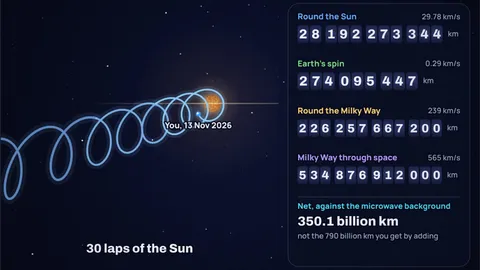
How Many Miles Have You Travelled Around the Sun?
Earth carries you 584 million miles round the Sun every year. Work out your lifetime total, see the sums, and learn why galaxy figures cannot be added.
How Fast Is Earth Moving Through Space? Every Frame
Earth spins at up to 465 m/s, orbits at 29.8 km/s and moves at 370 km/s relative to the CMB. How each speed is measured, and why they don't add.
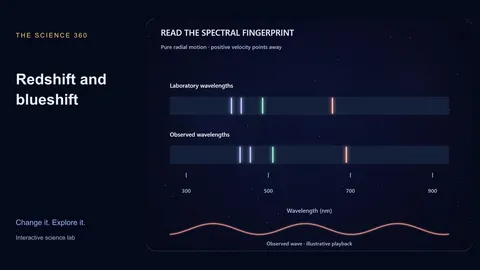
Reading motion in starlight: redshift, blueshift and spectral fingerprints
Measure a hydrogen line’s Doppler shift, distinguish fractional and absolute wavelength changes, and solve a synthetic mystery spectrum.
How Cold Is Space? 2.7 K, 120 °C and Everything Between
Deep space glows at 2.7 K, yet a sunlit plate near Earth hits 120 °C and ISS-height gas tops 700 K. What "the temperature of space" really means.