How much does an LED bulb save?
Compare bulbs that give the same light, measured in lumens. A 60 W incandescent bulb gives about 800 lumens; an LED gives the same on about 9 W. On for 5 hours a day, that swap saves 93 units a year, ₹652 at ₹7 a unit, and a ₹70 LED pays for itself in about 1.3 months. Swapping a 14 W CFL saves far less, about 9.1 units a year per bulb, because a CFL is already efficient.
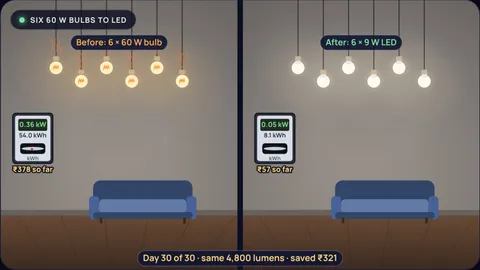
Choose the old lamp (incandescent, CFL or a tube light on a choke), the lumens, the number of lamps, the hours, the LED's lumens per watt and price, and your tariff. The two rooms on the stage give the same light and run their meters through a month. The defaults are examples as of November 2026 with sources below. For the longer explanation, read how much an LED bulb saves in a year.
Key results from the calculator
- One 60 W bulb to a 9 W LED, 5 hours a day: 93 units and ₹652 a year saved at ₹7 a unit, paid back in 1.3 months.
- Six CFLs to LEDs: only 55 units and ₹383 a year, paid back in 13.2 months.
- Four tube lights on chokes to LED tubes, 8 hours a day: 135 units and ₹944 a year; much of it is the choke's own waste.
- The power cut: 85% for an incandescent bulb, 36% for a CFL and 24% for a tube light on a choke, for the same light.
Six examples, worked
Each example uses an LED at 88.9 lumens per watt (9 W for 800 lumens), ₹7 a unit, and ₹70 an LED bulb or ₹220 an LED tube unless it says otherwise. The button loads it.
One 60 W bulb swapped for a 9 W LED
800 lumens, 5 hours a dayThe swap cuts 51 W. Over 5 hours a day for a year: 51 × 5 × 365 ÷ 1,000 = 93.1 units.
At ₹7 a unit that is ₹652 a year, ₹54 a month, so a ₹70 LED pays for itself in 1.3 months.
A home with six 60 W bulbs
5 hours a daySix bulbs draw 360 W; six LEDs giving the same light draw 54 W. The saving is 558 units a year.
That is ₹3,909 a year at ₹7 a unit, for ₹420 of LEDs.
Six 14 W CFLs swapped for LEDs
same light, 5 hours a dayA CFL already gives about 57 lumens per watt, so the LED saves only 5 W a lamp, 55 units a year for six.
That is ₹383 a year, so the ₹420 of LEDs takes 13.2 months to pay back. Many people wait for a CFL to fail before switching.
Four tube lights on old chokes
36 W tubes, 8 hours a dayA 36 W tube gives about 3,240 lumens but draws 48 W at the wall on a conventional choke. An LED tube for the same light draws 36.4 W.
Four of them for 8 hours a day save 135 units, ₹944 a year; four ₹220 LED tubes pay back in 11.2 months.
A shop with eight tube lights on for 12 hours
long hoursLong hours are what make a swap pay. Eight tubes for 12 hours a day save 405 units a year.
At ₹7 a unit that is ₹2,833, paying back ₹1,760 of LED tubes in 7.5 months.
Six bulbs on the Delhi slab tariff
house uses 300 units a monthThe 46.5 units a month saved come off the top of the house's 300 units, which Delhi charges at ₹4.50.
So the saving is ₹2,513 a year instead of ₹3,909 at ₹7, and payback takes 2 months.
Watts for the same light, and units saved a year per lamp at 5 hours a day
| Light | Incandescent | CFL | LED | Saved vs incandescent | Saved vs CFL |
|---|---|---|---|---|---|
| 450 lm | 34 W | 7.9 W | 5.1 W | 52 units | 5.1 units |
| 800 lm | 60 W | 14 W | 9 W | 93 units | 9.1 units |
| 1,100 lm | 83 W | 19.3 W | 12.4 W | 128 units | 12.5 units |
| 1,600 lm | 120 W | 28 W | 18 W | 186 units | 18.3 units |
Watts are lumens divided by 13.3 lumens per watt (incandescent), 57.1 (CFL) and 88.9 (LED). Multiply the units by your price per unit.
How the calculator works
Lamps are compared at the same light, in lumens. Each type has a typical efficacy in lumens per watt: about 13.3 for an incandescent bulb (60 W for 800 lumens, US FTC), 57.1 for a CFL (14 W gives the same light as a 60 W bulb, PIB), and 88.9 for an LED (about 9 W for 800 lumens, US FTC). A fluorescent tube gives about 90 lumens per watt (Philips TL-D datasheet), but on a conventional choke a 36 W tube draws 48 W (Hong Kong EMSD).
The watts saved per lamp times the number of lamps and the hours a day gives the energy saved each day; times 365 and divided by 1,000 gives units (kWh) a year.
On a flat tariff the money saved is the units times the price. On a slab tariff the saved units come off the top of the household bill, where the price per unit is highest. Payback is the price of the LEDs divided by the money saved a month.
What the model leaves out
- Lamp life: LEDs usually last much longer than incandescent bulbs, which saves replacement costs that are not counted here.
- Your LED: efficacy varies by brand and model; check the lumens and watts on the box and type the lumens per watt.
- Heat: incandescent bulbs warm the room, which matters a little if an AC is running; this is not modelled.
- Fixed charges and taxes: only the energy charge per unit is counted.
Common misconceptions
"Watts tell you how bright a bulb is." Watts measure power drawn. Brightness is lumens. A 9 W LED and a 60 W incandescent bulb both give about 800 lumens.
"Replacing a CFL saves as much as replacing an old bulb." A CFL is already about four times as efficient as an incandescent bulb, so the extra saving from an LED is small.
"LED tubes save only because LEDs are efficient." A good fluorescent tube is about as efficient as an LED; much of the saving is the old choke, which wastes power on its own.
Frequently asked questions
How much does an LED bulb save in a year?
Replacing a 60 W incandescent bulb with a 9 W LED that is on 5 hours a day saves about 93 units a year, ₹652 at ₹7 a unit. Replacing a 14 W CFL saves about 9.1 units, about ₹64.
What LED wattage replaces a 60 W bulb?
About 9 W. A 60 W incandescent bulb gives about 800 lumens, and an LED gives the same 800 lumens on about 9 W according to the US Federal Trade Commission. Check the lumens on the box rather than the watts.
Is it worth replacing CFL with LED?
The saving is small: about 5 W a lamp for the same light, 9.1 units a year at 5 hours a day. At ₹70 an LED, it pays back in about 13.2 months, so many people replace CFLs as they fail.
How much does an LED tube light save?
A 36 W tube on a conventional choke draws about 48 W. An LED tube giving the same light draws about 36 W, saving about 34 units a year at 8 hours a day.
How many units does a 9 W LED bulb use?
A 9 W LED uses 1 unit (kWh) every 111 hours. On for 5 hours a day that is about 16 units a year.
Keep learning
How Much Does an LED Bulb Save in a Year?
A 9 W LED gives the light of a 60 W bulb and saves about 93 units, ₹652 a year at 5 hours a day. CFLs, tube lights, slab tariffs and payback, worked.
How Many Units Does a 1.5 Ton AC Use per Hour?
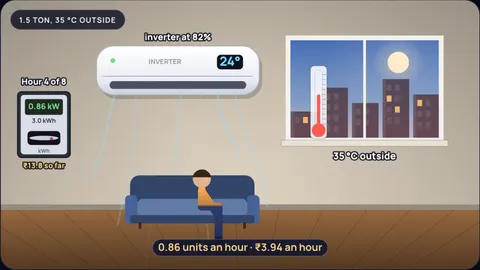
A 1.5 ton 5 star inverter AC uses about 0.86 units an hour at 35 °C outside and 24 °C inside. Worked examples for star ratings, thermostat and tariffs.
Joules, Calories and kWh: Energy Units Explained
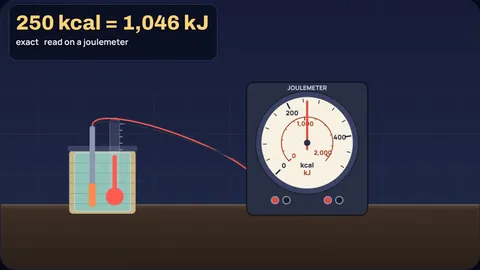
What a joule, a calorie, a food Calorie, a kilowatt hour, an electronvolt and a Btu are, the exact factors between them, and worked conversions.

write a program to calculate electricity bill in python
Introduction In our increasingly digitized world, the ability to automate mundane tasks through programming has become an invaluable skill. One such p