How do you work out the feels-like temperature?
In hot weather, use the heat index: at 32 °C (90 °F) with 70% humidity it feels like 40 °C, in the US National Weather Service danger band. In cold weather, use wind chill: −10 °C with a 30 km/h wind feels like −19 °C. Humidity slows the evaporation of sweat, and wind strips away the warm layer of air next to the skin.
The heat index uses the NWS Rothfusz regression with its official adjustments, and wind chill uses the 2001 formula used by the National Weather Service. Why muggy air feels so much worse than dry air is explained in Why does humid heat feel hotter than dry heat?.
Key results
- Humidity matters most when it is hot: at 32 °C, raising humidity from 40% to 70% raises the heat index from 32 °C to 40 °C.
- Dry heat can feel cooler than the thermometer: 40 °C with 15% humidity has a heat index of 38 °C.
- Wind chill: 0 °F with a 15 mph wind feels like −19 °F, the NWS's own example, where exposed skin can freeze in about 30 minutes.
- Frostbite: once wind chill drops to −28 °C, Environment Canada says exposed skin can freeze in 10 to 30 minutes; at −40 °C, 5 to 10 minutes.
Six worked examples
Each button loads the weather into the calculator.
32 °C and 70% humidity feels like 40 °C
heat indexIn °F this is 89.6 °F and 70%, which the Rothfusz regression turns into 105 °F. That is past 103 °F, so the NWS calls it Danger: heat cramps or heat exhaustion are likely with long exposure or activity. A typical summer afternoon in a humid city can reach this.
40 °C in dry desert air feels like 38 °C
dry heatAt 15% humidity sweat evaporates almost as fast as you make it, so the heat index (100 °F) comes out below the air temperature (104 °F). That does not make it safe: you lose water fast without noticing, and the index is for shade.
35 °C and 75% humidity: 53 °C
extreme heat indexAdd three degrees and a little more humidity to the first example and the index climbs fast. The heat index is 128 °F, past the 125 °F line for Extreme danger, where the NWS says heat stroke is highly likely with long exposure.
−10 °C and a 30 km/h wind feels like −19 °C
wind chillThe 2001 formula, in °F and mph, gives −3 °F. Environment Canada puts wind chills from −10 to −27 °C in the moderate band: frostbite becomes a risk with long exposure, so cover your face and hands.
−25 °C in a 40 km/h wind: −41 °C
frostbite riskA wind chill of −41 °C is in Environment Canada's very high band: exposed skin can freeze in 5 to 10 minutes. Keep every patch of skin covered.
0 °F with a 15 mph wind: −19 °F
the NWS exampleThis is the worked example on the National Weather Service wind chill chart: −19 °F, where exposed skin can freeze in about 30 minutes. In metric that is −18 °C air and 24 km/h wind, feeling like −29 °C.
Heat index at common temperatures and humidities
| Air | 40% RH | 55% RH | 70% RH | 85% RH |
|---|---|---|---|---|
| 26 °C | 26 °C | 26 °C | 26 °C | 27 °C |
| 28 °C | 28 °C | 29 °C | 31 °C | 33 °C |
| 30 °C | 30 °C | 32 °C | 35 °C | 39 °C |
| 32 °C | 32 °C | 36 °C | 40 °C | 47 °C |
| 34 °C | 35 °C | 40 °C | 47 °C | 55 °C |
Heat index from the NWS Rothfusz regression with its adjustments, converted to °C. Bands: Caution 27 to 32 °C (80 to 90 °F), Extreme caution 32 to 39 °C, Danger 39 to 52 °C, Extreme danger 52 °C (125 °F) and above. Values are for shade.
How the calculator works
Heat index: the tool first uses Steadman's simple formula, HI = 0.5 × (T + 61 + 1.2(T − 68) + 0.094 RH) in °F. If that, averaged with the temperature, is 80 °F or more, it uses the full Rothfusz regression instead, then the NWS adjustments for very dry air (under 13% humidity, 80 to 112 °F) and very humid air (over 85%, 80 to 87 °F).
Wind chill: WC = 35.74 + 0.6215T − 35.75V^0.16 + 0.4275TV^0.16, with T in °F and V in mph at about face height. It is only defined at or below 50 °F (10 °C) with wind above 3 mph; outside that the tool shows the air temperature.
Results are converted back to °C. Heat bands are from the NWS; cold bands and frostbite times are from Environment and Climate Change Canada.
What the model leaves out
- Sunshine: the heat index is for shade. Full sun can add up to 15 °F (about 8 °C); bright sun also makes cold feel milder.
- Activity and clothing: exercise, heavy clothes or a hard hat change how much heat you can shed.
- Wind in the heat: the heat index assumes a light breeze; it does not include wind speed.
- Individual factors: age, health, medicines and acclimatisation change who is at risk.
Common misconceptions
"Dry heat is harmless." It can feel cooler than humid heat, but you dehydrate quickly and the air can still overheat you, especially in sun.
"Wind chill can freeze water above 0 °C." No. Wind makes things cool faster, but nothing gets colder than the air. Frostbite needs air below freezing.
"The feels-like number is the temperature of my skin." It is the air temperature that would feel the same in calm, or in moderately humid, conditions.
Frequently asked questions
What is the heat index?
It is what the temperature feels like once humidity is included. At 32 °C with 70% humidity the heat index is 40 °C, because sweat evaporates slowly in humid air.
How is the heat index calculated?
The US National Weather Service uses the Rothfusz regression, a formula in temperature (°F) and relative humidity fitted to Steadman's tables, plus small adjustments for very dry and very humid air.
What is wind chill?
How cold it feels on exposed skin when wind is added. −10 °C with a 30 km/h wind feels like −19 °C.
When is the heat index dangerous?
The NWS bands are caution from 80 °F (27 °C), extreme caution from 90 °F (32 °C), danger from 103 °F (39 °C) and extreme danger from 125 °F (52 °C).
How fast can frostbite happen?
Environment Canada says exposed skin can freeze in 10 to 30 minutes at a wind chill of −28 to −39 °C, 5 to 10 minutes at −40 to −47 °C, 2 to 5 minutes at −48 to −54 °C and under 2 minutes at −55 °C or colder.
Keep learning

Why Does Humid Heat Feel Hotter Than Dry Heat?
Sweat only cools you when it evaporates, and humid air slows that down. The heat index puts a number on it: 32 °C at 70% humidity feels like 40 °C.

Metal and wood can be the same temperature. Why does only one feel cold?
Your hand feels heat leaving your skin, not just an object’s temperature. A simple comparison separates temperature, conductivity and misleading thermometer readings.
Why Does Water Have Such a High Specific Heat?
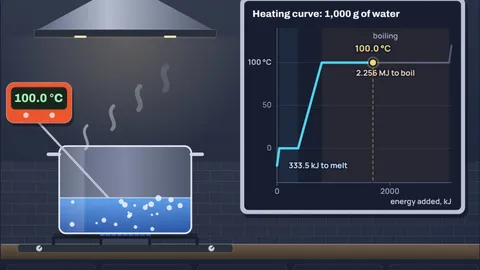
Water needs 4.184 J to warm one gram by 1 °C, over nine times as much as iron. Light molecules and hydrogen bonds explain why, with worked numbers.

How Cold Is Space? 2.7 K, 120 °C and Everything Between
Deep space glows at 2.7 K, yet a sunlit plate near Earth hits 120 °C and ISS-height gas tops 700 K. What "the temperature of space" really means.