Space 01
Why Are Planets Round but Asteroids Aren't? The Math
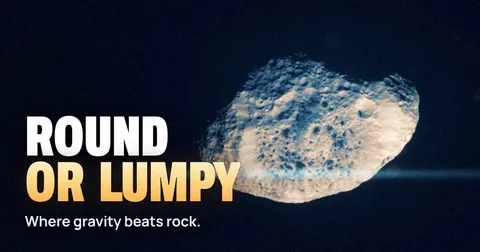
Gravity rounds a world once its central pressure beats the strength of rock or ice. We compute the threshold: about 200 km for ice, 300 km for rock.
Gravity rounds a world once its central pressure beats the strength of rock or ice. We compute the threshold: about 200 km for ice, 300 km for rock.
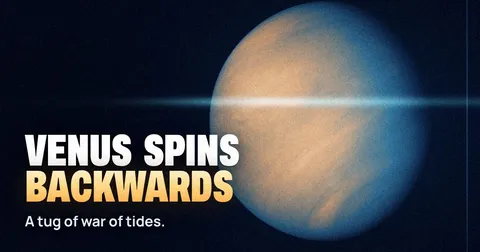
Venus turns once every 243 days, backwards, giving a 116.75-day solar day. Why atmospheric tides, not a giant impact, are the leading explanation.
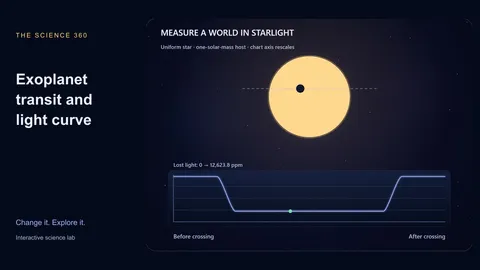
Infer a planet-to-star radius ratio from a transit light curve, compare Earth and Jupiter signals, and explore why grazing transits need more care.
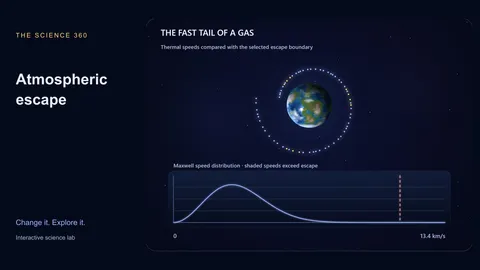
Compare escape velocity with a thermal gas distribution, and learn why a fast molecular tail does not directly give an atmospheric lifetime.
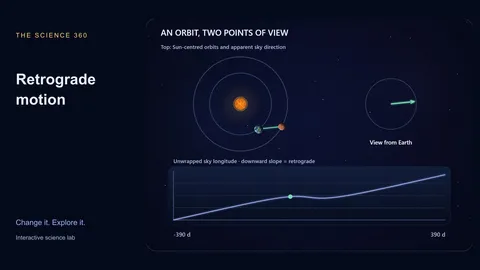
Use Earth’s moving viewpoint to explain Mars, Mercury and Venus retrograde motion, with a worked synodic-period example.