Physics 01
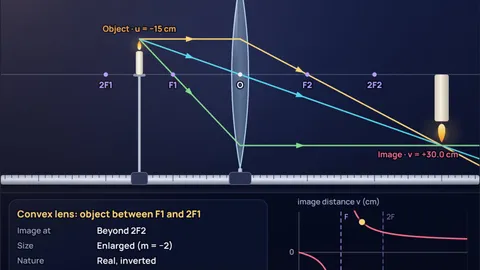
Image Formation by Convex Lens: All 6 Cases with Diagrams
Ray diagrams for all six object positions of a convex lens, with image distance and magnification worked out in the NCERT sign convention.
Ray diagrams for all six object positions of a convex lens, with image distance and magnification worked out in the NCERT sign convention.
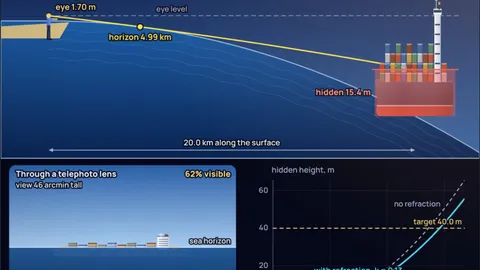
From the Burj Khalifa deck the sea horizon is 90 km away; from Everest, 360 km. How far you can see, and why distant peaks need two horizons added.
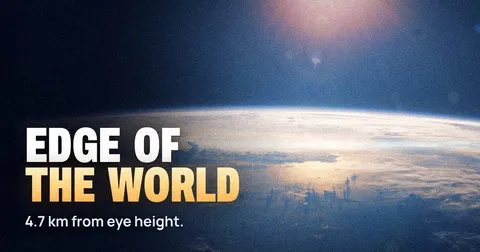
At 1.7 m eye height the sea horizon is 4.7 km away, about 5 km with refraction. The formula, how far you can see tall objects, and the 8 inches per mile error.
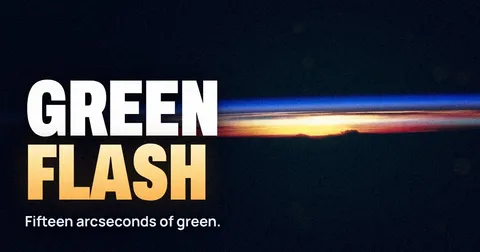
Every sunset has a green rim, but it is 4 to 8 times too thin to see. We compute the refraction and dispersion, and show why mirages make the flash visible.
A rainbow sits 42° from the point opposite the Sun because rays leaving a raindrop pile up at a turning point. Derivation, worked numbers and computed plots.
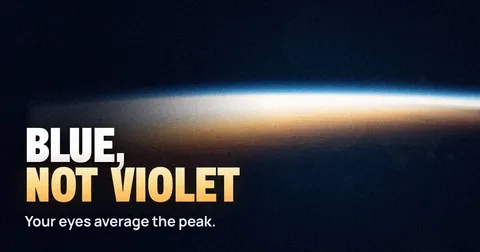
Skylight carries more violet than blue, yet the sky looks blue. We compute the scattered spectrum and run it through human cone data to show why.
Stars twinkle because they are points that cross one 7 cm air patch at a time. Planets span hundreds of patches. Here is the arcsecond math, with figures.
A star can look restless while its light is steady. Follow the light through moving air, see why planetary disks average out much of the effect, and try a careful skywatching comparison.