Space 01
How Long Would It Take to Drive to the Moon?
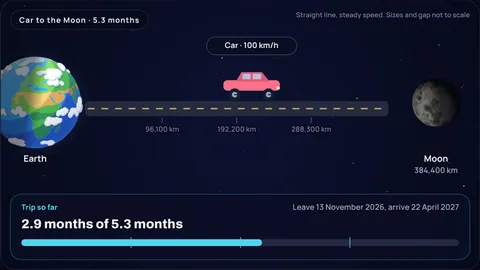
At 100 km/h, a non-stop drive to the Moon takes 160 days, about 5.3 months. Here are the sums, plus walking, flying and Apollo 11 for comparison.
At 100 km/h, a non-stop drive to the Moon takes 160 days, about 5.3 months. Here are the sums, plus walking, flying and Apollo 11 for comparison.
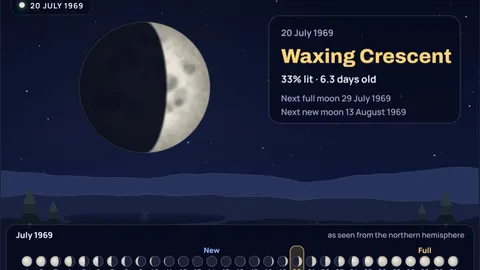
Find the Moon phase on your birthday, how much of it was lit and how old it was, and learn to check the answer yourself with two short calculations.
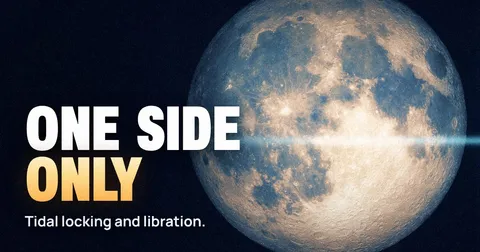
The Moon is tidally locked, spinning once per 27.3-day orbit. The torque that locked it, why we see 59% of it, and why it drifts 3.8 cm a year.
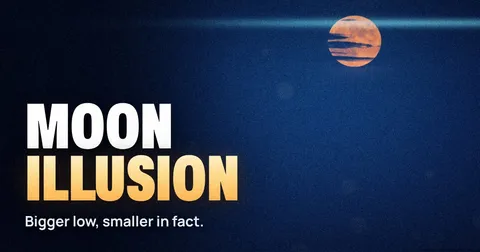
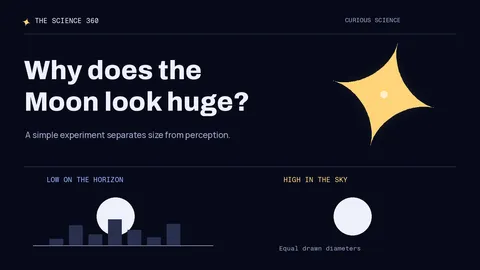
The horizon Moon looks huge, yet it's 1.7% narrower and 16% shorter than overhead. We measure it, then weigh the theories for why your brain inflates it.
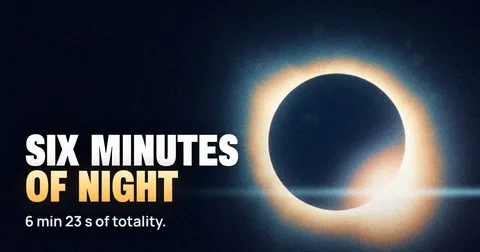
The 2 August 2027 eclipse gives 6 min 23 s of totality near Luxor. We compute why: a near-perigee Moon, a far Sun, and a shadow slowed by Earth's spin.
Why are there no stars in Moon landing photos? We run the exposure numbers for the Apollo Hasselblads and show which photos do catch Venus and stars.
Earth's air bends sunlight 1.1° into its shadow and strips the blue on the way. A worked model of the red Moon, the blue rim and why volcanoes darken it.
The Moon illusion feels convincing. A controlled photo comparison separates perception from orbital size changes, colour, and atmospheric distortion.