Space 01
Why Stars Twinkle but Planets Don't (With the Math)
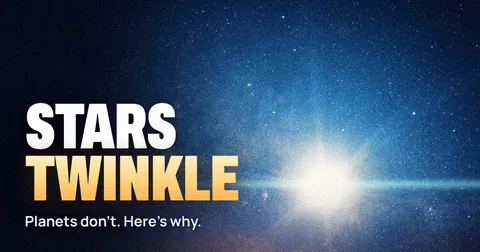
Stars twinkle because they are points that cross one 7 cm air patch at a time. Planets span hundreds of patches. Here is the arcsecond math, with figures.
Stars twinkle because they are points that cross one 7 cm air patch at a time. Planets span hundreds of patches. Here is the arcsecond math, with figures.
In an infinite, eternal universe every sightline ends on a star and the sky would blaze like the Sun. The math of Olbers' paradox and the real answer.
Venus turns once every 243 days, backwards, giving a 116.75-day solar day. Why atmospheric tides, not a giant impact, are the leading explanation.
The horizon Moon looks huge, yet it's 1.7% narrower and 16% shorter than overhead. We measure it, then weigh the theories for why your brain inflates it.
Earth spins at up to 465 m/s, orbits at 29.8 km/s and moves at 370 km/s relative to the CMB. How each speed is measured, and why they don't add.
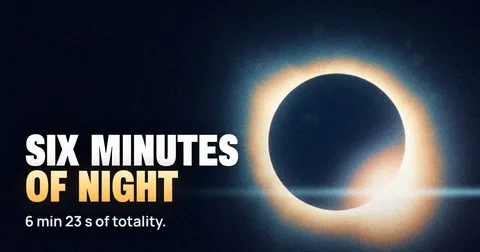
The 2 August 2027 eclipse gives 6 min 23 s of totality near Luxor. We compute why: a near-perigee Moon, a far Sun, and a shadow slowed by Earth's spin.